The Science Behind GoNano
GoNano is the first and only North American company to bring to market a sealant that replaces all sealants. That said, the technology behind GoNano spans decades and has gone through critical scientific and peer review. See why nanosilica replaces all other traditional asphalt shingle roofs for its durability and life-cycle cost savings.

What It Does
Permanently Modifies Material Structure
01
Modifies the molecular structure of asphalt shingles.
02
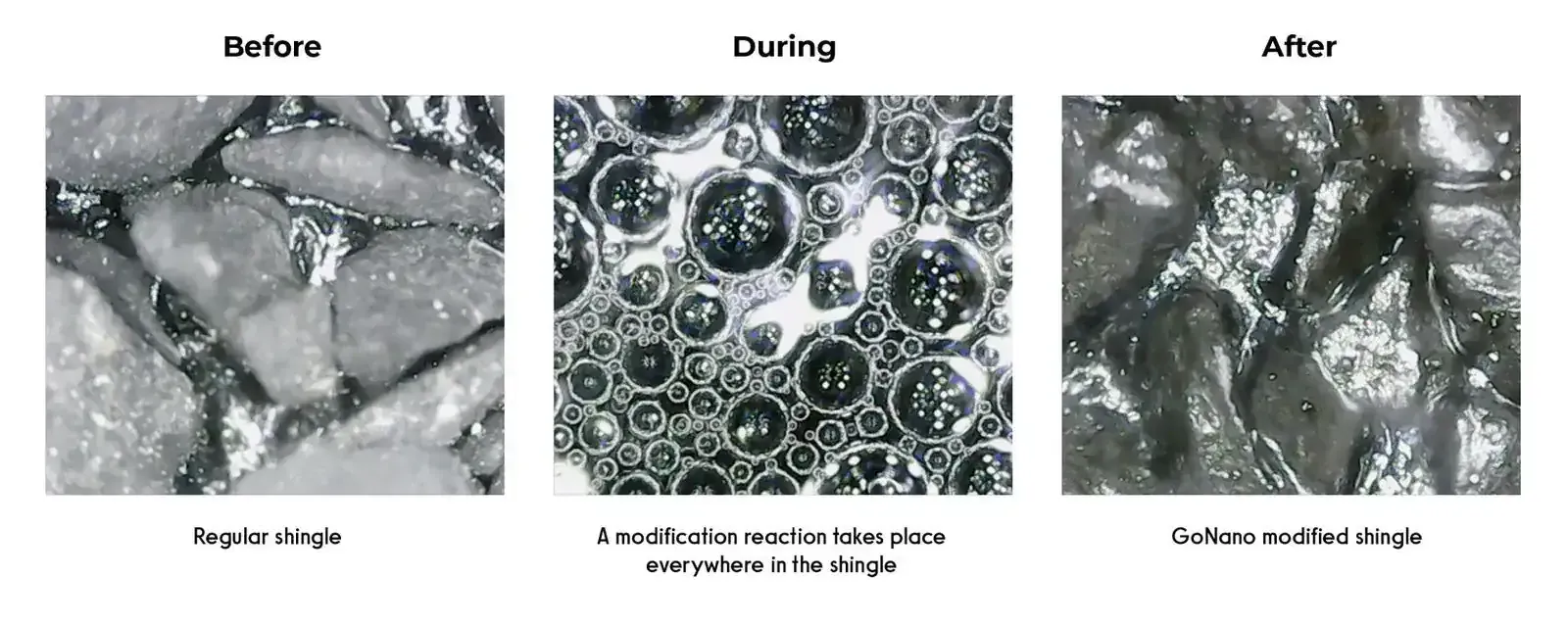
After application, reaction occurs with each shingle.
03
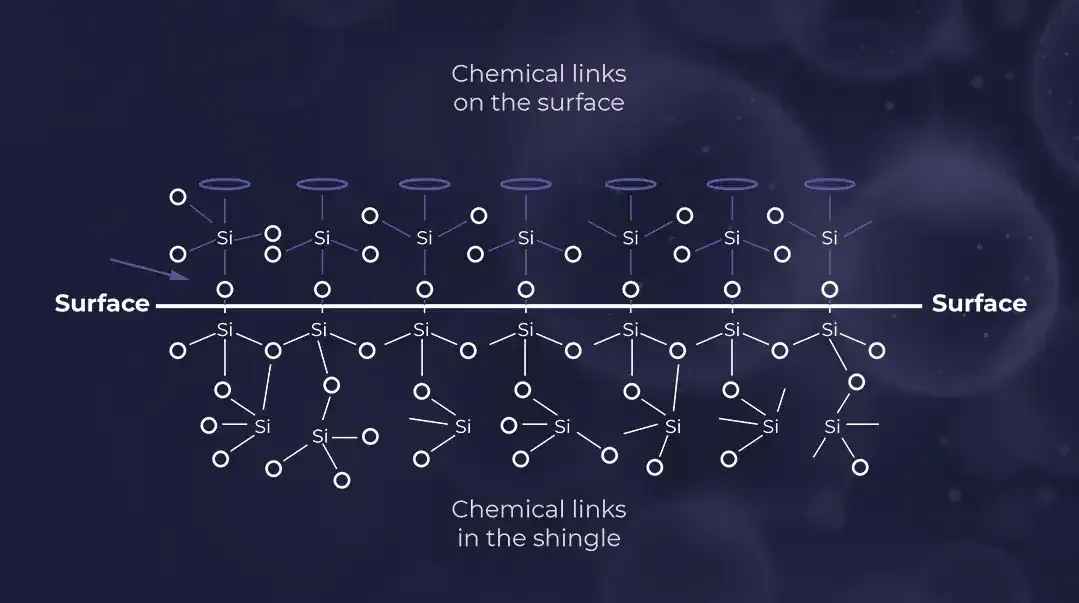
During reaction, both organic and inorganic material create new chemical links, called S1 particles.
04
S1 particles enter into asphalt pores and move outward, connecting with other shingles.

GoNano Advantages

Improved flexibility
Elastic strain resilience, high tensile strength to pressure and load, fracture aversion.
Hydrophobic
Impervious to moisture infiltration.
Adaptable Fatigue Life
Endures greater cycles and seasons of stress.
GoNano vs Traditional Sealants
GoNano’s asphalt enhancement sealant has been validated by the scientific community.
GoNano sealant
- Modifies the mechanical properties of asphalt
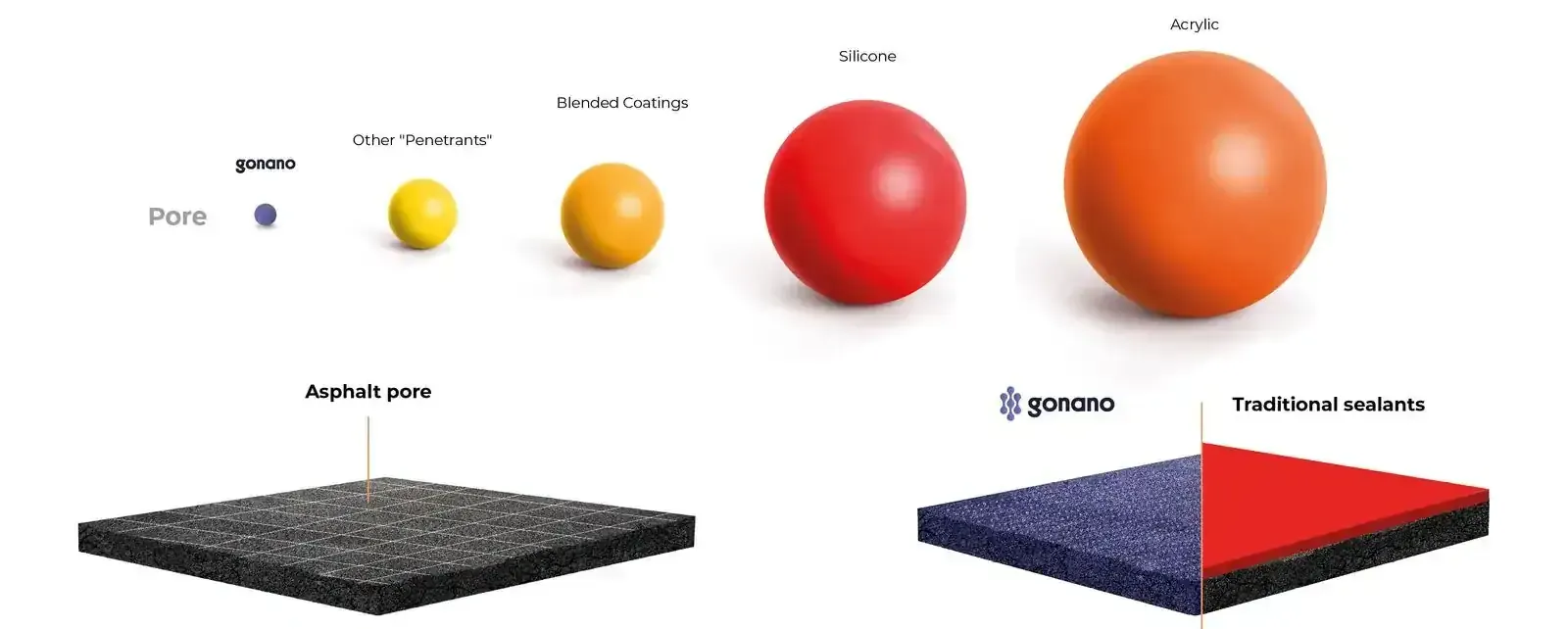
- Nanoscale (1000X smaller than a micro meter) forms precise shapes into asphalt pores
- Bonds to each asphalt shingle, and each shingle to the other
Traditional sealants
- Acts as an isolated, protective layer
- Typical repair on microscale, adds layer of oil
- Less durable, flexible and resilient to aging due to environmental conditions

Research shows one treatment of GoNano extends the average roof’s lifespan by 10 to 15 years.
Once modified, the new structural form of the asphalt enhances its durability, specifically its flexibility, hydrophoby, and anti-aging performance.
How it Protects Your Property
- Increased resistance to hail storms and high winds
- Cleans and prevents the growth of algae
- Prevention and reduction of walter infiltration
- Preserving and regenerating shingle color
- Maintaining granule composition
- Effective evacuation of ice and snow
What is Nanosilica?
Material
An inorganic nanomaterial similar to silica, characterized by very high silica density.
Manufacturing
Synthesized using processes such as precipitation, hydrothermal/solvothermal treatment, or thermal reduction.
Performance
Delivers improved performance through pozzolanic reactivity, which promotes effective pore-filling.
Nanosilica is an inorganic nanomaterial, similar to silica, but it is characterized by high silica density (99%). It must be synthetically created through one of three processes: the precipitation pathway (silica reacts in a solvent through purification and dispersion), the hydrothermal/solvothermal pathway (silica goes through precipitation, high pressure and temperature conditions), or thermal reduction (silica is placed in temperatures of up to 1700°C to 2300°C). Once nanosilica is formed, its improved performance is attributed to its pozzolanic reactivity (the chemical reaction that occurs for pore-filing).
A Unified Barrier Against Strains Caused by Environmental Factors
The evolution of GoNano technology created a shift in how sealants are approached. A regular shingle is sealed with oil, filling up the space in between shingles. GoNano modifies the molecular structure of asphalt shingles permanently. After application, a reaction occurs within each shingle. This reaction fuses both organic and inorganic material, creating new chemical links, called S1 particles. These S1 particles link shingle granules together, working from the inside out, creating a unified barrier against environmental strains and saves you money by extending the lifespan of your roof.